Sign up for Lesson Plans, discounts & more!
The Proterozoic Eon
Life Gets More Complex
2.5 Billion To 541 Million Years Ago
The Proterozoic Eon would have been an exciting time to be an observer
of life development on planet Earth. The fiery formation processes of
the Hadean, the cooling crust, and the undersea continent-building of the Archaen created plates that floated on the still molten mantle. These moving plates are what we now call plate tectonics.
Land In The Proterozoic Eon
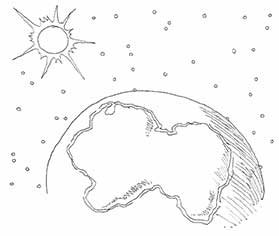
The plates rested on a very different magma than our modern-day plates. The plates themselves were younger and thinner (funny how that works!!!) and the magma was hotter. This would have made the magma more liquid than today, so likely the continental movement would have been faster, with collisions and fractures more frequent. A single super-continent formed. Today it is called Rodinia.
At the center of Rodinia is a baby North America called Laurentia. Its western border lies next to the infants that would grow into Australia and Antarctica , while the eastern coast is next to western Africa.
Life In The Proterozoic Eon
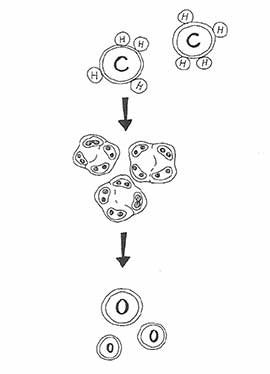
The early life that formed in the Archaean seas were predominately anaerobic, they didn't need oxygen to live. For many of these bacteria oxygen was deadly. As the autotrophs: cyanobacteria and early plants grew abundant creating more and more oxygen many of the habitat for the anaerobic bacteria became less and less. While the oxygen was not good for them it made new life possible.
This new life was the eukaryotes. These were single celled organisms but the cells had a nucleus. They were bigger that the prokaryotes and they used the oxygen for energy. Eventually, With the onset of the eukaryote, living organisms were able to join together into groups of eukaryote cells. Toward the end of the Proterozoic, multi-cellular algae and the first multi-celled animals were the result.
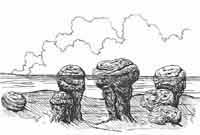
This was a big deal for life in general. For about 4 billion years prokaryote bacteria changed very little. Eukaryote were all about change! Within their nucleus were DNA. They could divide like the prokaryotes by mitosis but they could also join with other eukaryote cells and share chromosomes. This lead to endless variety in the new organisms.
Scientists think that near the end of the Proterozoic Eon The earth had an ice age like no other. Not everyone agrees on the details but most agree that all or nearly all of the earth became frozen! This was called Snowball Earth or for those who believe that not quite everything was frozen Slushball Earth. Not too much is known about this time called the Cyrogenic. The theory is that there was so much oxygen replacing carbon dioxide in the atmosphere that temperatures dropped to freezing even at the equator!

The earth eventually thawed out around 635 million years ago. It was the dawn of a new age. In the Ediacaran Hills of Australia an abundance of fossils of multicellular life forms were found in 1946. With time others found similar fossils near the White Sea in Russia, Mistaken Point in Newfoundland, Canada, Namibia, and China, that dated from about 635 to 541 million years ago.
The new time was given the name Ediacaran Period after the first discovery. The organisms were called the Ediacaran Biota, and they are nothing like anything alive today. Some we don't know if they were plants or animals! In any case the end of the Ediacaran Period and the end of the Proterozoic Eon marked the beginning of the Paleozoic Era and the Cambrian Explosion.
Go to Geologic Time Line
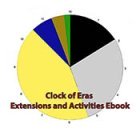
For more on geologic time visit the clock of eras page
Preceeding the Proterozoic Eon is the time of the archaean
The Paleozoic Era follows the Proterizoic Eon
Proterozoic Eon Fossils for sale at Fossilicious.com
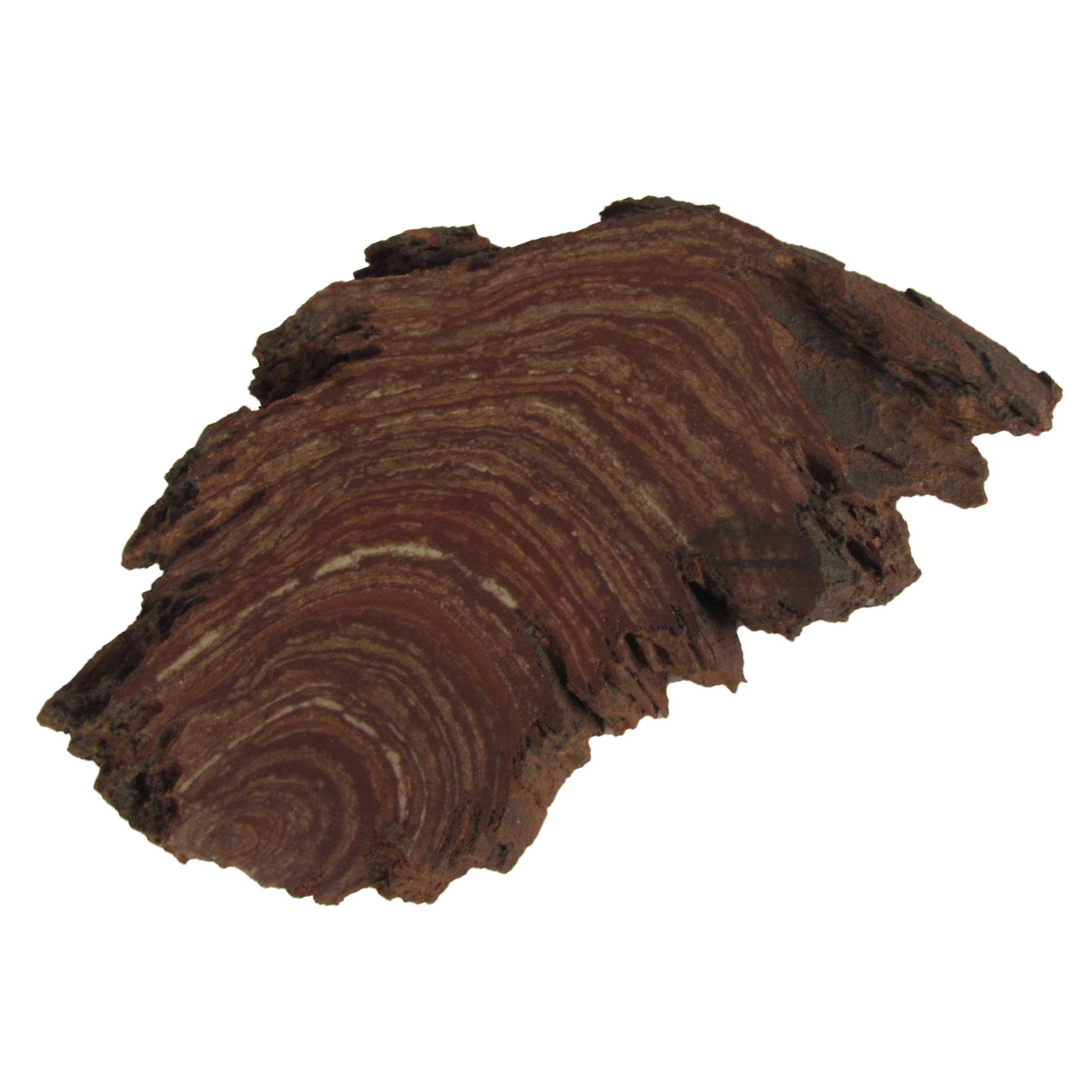
Check out some of the Educational Materials for sale on our sister site fossilicious.com.
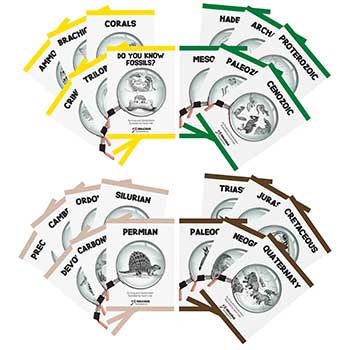
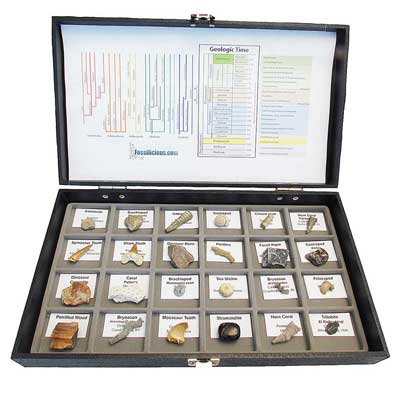

interested in more? If so, you may want to check out our other sites:
fossilicious.com - Our online fossil and mineral rock shop.
rocksandminerals4u.com - An educational site about rocks, minerals, and geology.
 |
 |
 |
Geologic Time Geologic Time Line
Cenozoic Era
Quaternary
Neogene
Paleogene
Mesozoic Era
Cretaceous
Jurassic
Triassic
Paleozoic Era
Permian
Carboniferous
Devonian
Silurian
Ordovician
Cambrian
Archean Time
Hadean Time
Teachers Resources
Activities for Education and Fun
Earth Science Lesson Plans
Activities For Kids
Fossil Lesson Plans
Fossil Activities
Education Articles
Coloring Pages
Dinosaur Coloring Pages
Montessori Materials
Geology Club
Fossil Hunting
 |
 |
 |